Showing posts with label educational philosophy. Show all posts

Saturday, November 8, 2025

Effective Use of Chalkboards and Whiteboards

 This article was originally written for and posted at The Dock for Learning.


Effective Use of Chalkboards and Whiteboards


Our classroom chalkboards or whiteboards are an amazing tool that we teachers can use to demonstrate and emphasize whatever concepts we are presenting to the students.  Here are a few tips on how to use our boards more effectively. 


  1.  Keep them clean!  At least once a week, erase everything (except perhaps a few assignments in the upper corners) and wipe them down with water and then a dry cloth.  Dirt and smears distract from your teaching and clutter what you’re writing.  (Hint: Many teachers have noticed that any kind of cleaners eventually take the smooth shiny finish off whiteboards.  Just use water!) 


  1.  Erase often.  The more white space there is, the less distractions there are.  Then students can focus on the task at hand.  


  1.  As much as possible, use neat handwriting.  You are modeling for your students what you expect their writing on their written assignments to look like.  Let them know what you expect by visually demonstrating this every time you write on your board. 


  1.  Use your board to write student assignments.  It saves much time and repeating if we can just post the assignments on the board for the students to refer to as needed.  Always have them in the same location so that students know where to look.


  1.  After orally presenting the main point of your lesson, demonstrate on the board the concept you just taught, going through it slowly (it might be easy for you, but new and confusing to students), and explaining step by step as you mark on the board.  This gives them both an oral and visual presentation.  The process of watching a teacher demonstrate how to do something the right way, step by step, is invaluable.


  1.  Pause in between steps.  This gives the students a chance to comprehend it at their own speed, (and students do comprehend at different speeds–go about the pace for your slowest student.)  It also gives students a chance to think on their own what step comes next.


  1.  Once students have heard, read, and seen their teacher demonstrate how to perform a new concept, use your board to let them try it out, telling you which step to take next and how to do it.  You can affirm or correct them as needed, and they get valuable guided practice. 


  1.  While most of these concepts apply to math, English, and spelling, we should use our boards for science and history as well.  Students don’t process reading text or looking at pictures in books the same way that they process seeing a teacher draw or explain a concept on the board.  Think of it like viewing a chalk drawing.  It’s a bit mesmerizing to watch.  If your students are using science sketchbooks, draw on the board whatever concept you are studying in science that day, demonstrating what you want them to draw in their sketchbooks.  Be sure to label things, too. 


  1.  For social studies or history, our boards can be visual billboards of dates and persons.  It doesn’t matter how bad your drawing is, students will appreciate the effort and enjoy seeing you put  it on the board.  It’s yet another way to remember a fact or concept.  The board can also be used to illustrate cause and effect or chronological order.  


  1.  Our boards are also wonderful to use for art.  The entire room can see from afar what their drawing or the art process is supposed to look like, and as you display step by step, each student can use your work on the board as a sample or springboard, and proceed with their own individual project.  


Our chalk or whiteboards are probably the most useful tool we have to use besides our voices and textbooks.  Use them effectively, and your students’ comprehension will increase.  

Monday, September 16, 2024

Teacher's Checklist for the First Weeks of School


Teacher’s Checklist for the Second Week of School


   The first week of school is always a whirlwind of activity–a new schedule, new students, new books, and new teachers (sometimes).  Once the dust has settled and we’ve made it through the first few days or weeks of school, it is wise for us to evaluate and make adjustments in several areas in order to better serve our students and ourselves.  


   Here are a few questions we can ask ourselves to consider in what ways we can make life easier for ourselves and our students. 


  1.  Does the schedule need to be adjusted?  Do we need more time for math and less time for science? 


  1. Which students need more accountability to get their work done?  How can we positively encourage them to do that? 


  1. Which students are confused?  How can we help them adjust, especially if they are new? 


  1. How can we as teachers encourage the older students (both in age and ones who have been in your school before and understand the culture) to be models and encouragers to the new and/or younger students? 


  1. Are any students clearly in “over their heads” and possibly need tutoring or to be placed in a different grade, book, or reading level? 


  1. Am I balancing my academics with the more enjoyable subjects like art, music, read aloud time, and physical activity?  While we do want our students to work hard on their academics, school shouldn’t be all sitting at desks writing all day.  


Besides asking ourselves these questions the first weeks of the year, we would be wise to be continually monitoring these areas throughout the year.  That way not one student will “slip through the cracks”, and everyone, including the teachers, will enjoy a positive and enjoyable school year.  


Thursday, June 13, 2024

The Man With Ten Talents: Because Thou Hast Been Faithful

This article was originally published in Lightlines, a magazine for Christian Schools published by Christian Light Publications.  


Luke 19:15 And it came to pass, that when he was returned, having received the kingdom, then he commanded these servants to be called unto him, to whom he had given the money, that he might know how much every man had gained by trading.


16. Then came the first, saying, Lord, thy pound hath gained ten pounds.


17. And he said unto him, Well, thou good servant: because thou hast been faithful in a very little, have thou authority over ten cities.


The Man With Ten Talents is someone I’ve always admired.  Although I used to view him as an astute businessman, I now believe that he was possibly  a teacher.  The word “talent” used to mean a weight and unit of currency, but it is ironic that the word also means a natural aptitude or skill.  While most other professions are important and indeed more financially lucrative, their end products have the potential to rust, be eaten by moths, or be stolen.  In view of eternity, they don’t compare to teaching.   We teachers are actively investing our time, skills, and energy into persons–humans with eternal souls.     


Of all the parables Jesus spoke, I believe that this one applies to teachers the most.  Just think about it.  When God equips individuals with a love for learning, and a love for students, He also provides a way for us to develop the talents and skills it takes to handle teaching multiple subjects to a group of rambunctious and creative youngsters all day long.  He has given to us the potential of earning those ten talents. 


I do not believe that it was easy for the Man With Ten Talents to invest his money, time, skills, and energy to multiply what he had been given.  It was probably very hard work.  But he was not being lazy like the man who just hid his talent in a napkin.  Developing these skills is time-consuming and arduous work.  Teaching can be exhausting, and working with children and youth is challenging.  


Because teachers work with so many people directly and indirectly (students, parents, school board members, church leadership), we probably have the potential for more conflicts and misunderstandings in our jobs than any other profession.  We also have more responsibility.  Those children are very important to God and their parents.  And we have been given the talents to teach and care for them for many hours every week.  Are we being faithful with what God has given to us?   


Matthew 6:19 Lay not up for yourselves treasures upon earth, where moth and rust doth corrupt, and where thieves break through and steal:


20. But lay up for yourselves treasures in heaven, where neither moth nor rust doth corrupt, and where thieves do not break through nor steal:


21. For where your treasure is, there will your heart be also.


My heart is with my students.  Although I am indeed focused on teaching my subject matter, of greater importance is my students’ safety, understanding, well-being,  and ultimately, salvation.  Teachers have a great responsibility, and thus great potential to positively impact the students that God and their parents have entrusted to them.  


If you have been given this talent, use it faithfully and invest it wisely.  It is incredibly hard work, but, “For unto whomsoever much is given, of him shall be much required,”  Luke 12:48a.  Are we being faithful with what God has entrusted to us?  


Tuesday, June 11, 2024

Lamenting the Loss of the Pay Phone


In the spring of 2017, we had an elaborate Treasure Hunt Achievement Party, and one of the clues was hidden behind the pay phone at the Terre Hill Community Center (the old fire hall) adjacent to the Terre Hill Park.   Here is part of what I wrote about that: 

Today, seven years later,  I drove by the same spot and noticed this.  


And just like that, it's gone.  Another little bit of history disappeared.  It was especially poignant to me because just two days ago I was telling a story in which I had stopped at a phone booth to look up an address and phone number in one of those huge old phone books which hung from a wire inside the booths.  That was around 1989 when they still existed.  

This was just another reminder that times are changing.  Our students are changing.  But there is still much merit, specifically relating to learning, in the old methods.  Handwriting and cursive are good for our students' brains and their mental processing.  I believe that working math problems out by hand and writing with pen and paper are essential to our students' cognitive processes.  Yes, I do use calculators and computers. My students do at times as well, but not until the tried and true methods are learned and well-rehearsed.  These will not cease to exist in my classroom, even if the pay phones cease to exist in my corner of the world.  

Related Posts:

Teaching Generation Alpha Students 

The Joys and Challenges of Teaching Generation Z Students

Handwriting, A Window to Our Students' Brains  

Thursday, May 30, 2024

Retrospective on the Year

 This article was originally posted on The Dock for Learning. 


The last weeks of May found me beachcombing in North Carolina and eating inordinate amounts of Mexican food in Texas.  Both were fabulous, mind-clearing, and relaxing.  But now, between music camps and whenever I have a quiet hour, I'm working on getting everything ready for August so that I can enjoy the rest of my summer.  Here are a few thoughts on evaluating the past school year and preparing for the next one.    


Retrospective on the Year 


As the end of the year approaches, many teachers look back on what went well and what they want to keep for next year, as well as which areas they need to improve upon.  


I’m happy with my current schedule, and it took a lot of adjusting to get one that worked, especially with juggling four grades in one classroom.


I’m also happy with our current policy on fix-ups, how the students are relating to each other and their teachers, and school culture. 


There are also a few things that I’d like to improve.  I need to make sure that I’ve got all my copies made over the summer so that I’m not having to do that in the middle of the school year or on weekends.  I’d also like to add some new physical education ideas to my list so that I can plan ahead a little better.  I try to have thirty-six new art projects–one for every week of the year.  I need to finish up that list as well.  


While almost all of the curriculum for next year is already ordered, there are still a few loose ends such as handwriting that I’m still looking for.  I will get that done as soon as school is out.  


I’m also collecting program songs that I’d like to do for both programs next year, and making a list of possible field trip options.  I’m putting all of these ideas on one master document that I can print out, put on a clipboard, and have handy all year.  The extra planning done ahead of time really pays off the next school year.


And, I hope to get all of this done the first week after school is out so that I can enjoy the rest of my summer, although I am always collecting ideas and adding them to my list.  If I work on these things while they are fresh on my mind at the end of the school year, I should be well prepared for the start of the next school term in August.  

Wednesday, April 24, 2024

Leader or Lord?


This article was originally written for Lightlines, a magazine for Christian schools published by Christian Light Publications.


Leader or Lord?   


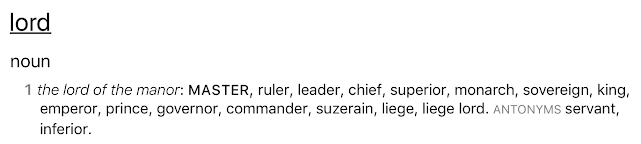
The most pleasant and motivating people to work under are usually leaders – not lords.  Rather than greatly enjoying their superiority, position, and power; effective leaders have the ability and the willingness to view situations from the perspective of those under them.  Good leaders empathize with those in their care.  They do not find pleasure in lording over them, but rather in guiding and gently leading by example rather than barking orders and bossing others around. 


      Uriah the Hittite was a wonderful example of this kind of leadership.   When summoned back to Jerusalem by King David, Uriah answered all of David’s questions before being dismissed with a great amount of food and sent back to his house.  Uriah instead slept at the door of David’s house because he could not bear to be living in luxury while his men were sleeping in tents and out in the open fields.  It just didn’t seem right or fair to him that he should be privileged while the men who looked up to him were away from their homes and families while he relaxed and enjoyed a vacation. 


     Years ago I was teaching a large group of students.  We were out on a hot football field in the middle of the summer.  The director of the group was up in the stands ordering the students around as they practiced.  The students were hot and tired.  They needed rest and a water break, but the director was enjoying his power, and kept pushing them.  I was on the field teaching as well.  I desperately wanted to leave and get a drink – which I could have easily done because of my position.  But I was experiencing the same situation my students were, and I knew how they felt.  I realized that they would feel the same way about me as they did the director if I had walked off and enjoyed a nice cool drink while they suffered, so I decided to stay and suffer with them.  Finally, I could bear it no longer.  I left and returned with a squirt bottle.  I went to every student and gave them a much needed drink of water.  


     We don’t teach so that we get to enjoy our authority and power.  We teach so that we can impart knowledge and encourage our students.  Leading by example is one of the best methods we can use.  I often tell my students that I was up until after midnight grading papers or preparing something special for them.  I want them to know that they are important, that learning is important, and that I am willing to work hard because it is.  They don’t all comprehend this, but most of them get the message: I care about this, so you should too.   One of my seventh grade boys once wrote “If this matters this much to you, it makes me care too.”  Just seeing this kind of result motivates me to keep leading this way.  


     Uriah’s men probably admired him, respected him, and followed him because of the kind of leader he was.  He was not trying to be their buddy or friend, he was concerned for their lives and well-being.  He was truly a great leader, and he died doing what was right.  That is the kind of teacher I hope to be.  One who stands up for what is right, one who leads by example, and one who empathizes with my students rather than lording over them.  This doesn’t mean I’m easy on them; it means that I work hard and expect them to as well.  It means modeling everything from neat handwriting to cheering them on to write that research paper.  


        Teachers should consider their students before themselves. Being a great leader isn’t easy, but it is important, and we should learn how to do it well.  Modeling the behaviors we expect, keeping students accountable; and empathizing with them (putting ourselves in their shoes), will all help us to be gracious leaders rather than lords.  


Thursday, April 18, 2024

Teacher Priorities: Teaching the Youngest Students

This article was originally written for and posted at The Dock for Learning


Teacher Priorities: Teaching the Youngest Students


What should kindergarten and first grade teachers prioritize in order for their students to have a positive early school years’ experience that equips and prepares them for the rest of their school years?  


1.  Security.  First of all, students should feel that they are in a safe environment where they feel cared for and protected.  Five or six years old is still a fairly young and tender age, especially since most of our students are used to being at home with their parents for almost all of their preschool years.  It’s best if they can visit the school while it is in session.  This is best done with a parent holding their hand if necessary, leading and guiding them, encouraging them and reassuring them that this is a safe and enjoyable place to be.  They should be welcomed by the teacher and other students, who should smile and be friendly.  


The environment makes a huge difference as well.  It should be warm, interesting, and inviting, opposed to cold and sterile.  We usually have age-appropriate books and a few puzzles laying out on tables.  Art adorns the walls, and our current art projects are usually in progress laying nearby.  

There should be an extra desk for any visiting student to try out, and a carpeted, comfy reading area.  Ours has a tee pee on a soft rug, crocheted fruits and vegetables, books, and brain games in it.  Students are encouraged to explore these areas at some point in their visit. 


We have had students enjoy their visits the most when they were included and got to participate in whatever classes were going on when they arrived.  We have extra papers or supplies nearby, and students are invited to join in the current classes, but never put on the spot and asked to answer a question unless they wanted to.  


One of the greatest fears younger students have at school are the older students.  It helps if they are introduced to these older students while they are seated, not standing up and looking tall and scary to the younger ones.  I ask my older students to smile and say hello.  We strive for more of a family atmosphere, and being kind to the youngest students goes a long way toward this goal. 


All of these should help students to feel welcome, safe, secure, and cared for at school. If students are worried or don’t feel safe, they are going to have a hard time relaxing or learning. 


2.  Calmness.  The early years of school set a precedent and  mold a student’s state of mind and how they approach school.  School should usually be quiet, calm, and orderly.  Nothing should be rushed.  Everything should be purposeful and calm.  The teacher should set the pace for this by leading her students well and setting a calm example.  Softness and gentleness should be the norm, and she should lead out with authority and calmness.  This does include lunchtimes and breaks.  They should be times of laughter and rest—a mental break—but not a time of chaos and disorder.  Games and free time after lunch are most effective if they are not too wild, and when students understand that they are to reenter the classroom in a calm state of mind, ready to get back to mental work.  


3.  Order.  Working side-by-side with calmness is order.  There should be a set schedule for the day that is usually pretty closely followed so that students, especially the younger ones, will know what to expect.  There is also safety  and comfort in following a daily “rhythm.”   


The teacher should also make sure that the students are all listening when directions are given, and that students understand exactly what it is they are to do.  Practicing doing things correctly ahead of time (raising hands to speak, etc.) is very helpful for all students, but especially the youngest ones.  


4.  Handwriting!  From the very beginning, having good handwriting should be stressed.  Students should learn the correct way to hold their pencils, using the thumb and first two fingers in a “lobster pinch.”  The triangular rubber pencil grips are extremely helpful in this endeavor, and we make sure that all students start out with them and have access to them as long as they desire.  


Students should also learn how to correctly make the strokes the right way.  Teachers should repeatedly model this in large, bold strokes on the board, and then have students practice this with them in the air, finally repeating the process on paper.  The larger lined paper should be used.  I prefer the kind that only has one dotted line down the middle and a red line for the baseline.  Students should also clearly understand which letters go “down to the basement:”  g, j, p, q, and y.  Students  will often try to keep the letters above the line if they are not taught properly.   


They should also learn to press down fairly hard with their pencils and make bold downstrokes—not faint upstrokes—when writing.  This will result in purposeful and precise strokes, and not wispy light ones.  


5.  Focused work ethic.  Having an overall classroom culture of focusing on work when it is time to work, but then having order and calm when it is time for the less-focused activities is a wonderful balance.  Students will feel safe in these parameters, know what is expected of them, and will perform accordingly.  


6. Consequences.  While obviously these should not be stringent, there should be set classroom procedures that allow a teacher to maintain both his classroom culture and calm demeanor.  That’s where consequences come in.  This often entails a warning, followed by a time out in a space away from the rest of the class but still visible to the teacher, and finally, a written slip or communication with a parent.  Students thrive when they are operating within set parameters with known consequences if they make the choice to function outside of these guidelines.


Tuesday, April 2, 2024

Gentle, Slow-paced Learning: the Tortoise vs. the Hare: Teaching Special Needs Students


This article was originally written for and published in Homeschooler's Friend, a magazine published by Christian Light Publications.


Gentle, Slow-paced Learning: the Tortoise vs. the Hare 


     In the world of a special needs child, slow and steady is better than fast and sloppy, or worse yet, fast and not understanding.  The end goal is that our students understand what we are teaching them, and with special needs children, that means taking the route of the tortoise rather than that of the hare.  


     I have found that teaching the same concepts over and over again in a slow-paced manner yields greater results with these children.  Finding different ways to present the material, realizing that something hands-on produces a better outcome, is more important than just finishing a worksheet.  Using math manipulatives, letter blocks, and science experiments along with the written text and workbooks will help students remember concepts better.   


      It is also perfectly acceptable to slow down and cover one lesson in two different class periods (one earlier in the day and one later in the day) or even take two days if the child truly cannot comprehend or is seriously struggling with a concept.  It is more important to slow down and take the time to ensure that the student not only understands but can retain the information.  It is also helpful to begin a lesson by asking your student questions about the last few concepts learned to review and test their retention of those concepts before moving on to new material. 


     Art, music, and recess are vital parts of a special needs child’s curriculum as well.  These help any student look forward to school because they are the more enjoyable subjects. Art especially has so many advantages.  It uses the more imaginative side of the brain which helps creativity in thinking skills.  This not only allows students to enjoy being creative,  but helps them to process and think differently about math, language, or science.  I have found that students who do fifteen minutes of art every day are more happy and innovative students who look forward to school much more than the average student.  Using one of the two following approaches works well as leverage to encourage students to get their work finished. 


  1.  These more fun subjects can be interspersed in the day’s activities.  When they finish math,  reward them with fifteen minutes of art.  After their English lesson is completed, reward them with fifteen minutes of music.  (This can be singing, clapping, counting beats, etc.)  


  1.  The other option for more high-functioning students is to complete all of the more difficult subjects first while their minds are fresh and more alert, and then conclude the day by rewarding them with the more enjoyable subjects. 


Special needs children should be treated much like other students; they just need more time, repetition, and hands-on learning than our normal students.  Offering short art and music classes interspersed as rewards is also helpful in encouraging them to finish their regular schoolwork.  


Suggested Resources 


Music: Sing for Joy (Shenandoah Christian Music Camp)

Praises We Sing  (Christian Light Publications)

With Glad Voices (Illustra Graphics Publishing)


Art artprojectsforkids.org

StudioARTiculations.com 

  55 Hands-on History Projects* 

Art for Everyone*  

*available from thePlainProfessors.blogspot.com;

                use the Contact Form above to request these resources


Thursday, March 28, 2024

Thoughts on Grading


This article was written and published at The Dock for Learning.  


Fair and Square


First of all, I prefer to grade in a way that is what I call “fair and square.”  If there are twenty-five questions, then they are each worth four points.  If there are thirty-three questions (or close to it), then they are worth three points each.  Crazy weird in between numbers?  An EZ Grader has been one of my favorite teacher toys since 1989.  If feel that if I have to take off fewer points than that because of low scores, I either need to get new curriculum or teach better.  


Grace vs. Pickiness


Note:  This section only applies to daily grades which do not get recorded.  For tests that get recorded, everyone gets the same treatment.  


There are two main types of students, (with a few in between.)  The first extreme is the hard-working-but-struggling student.  This student is really trying hard, so if the math problem says to round the decimal number to the hundredth's place, and she writes 5.684 instead of 5.68, I will probably write “read directions—hundredth’s place” on it, but I won’t mark it wrong nor take off an extra point for it (not yet anyway.  The next quarter is coming. :-)


The second type of student almost always gets grades of ninety-five to one hundred.  Those are the ones I try to be really picky with, so that they will strive to excel even more. I will write a note on every little thing, and expect the pre-algebra answer to be 5.68.   


I will also be extra picky with their writing, because it is usually pretty good, but there is always room for improvement.   If there is a word that works but is a little more “first grade” as I call it, I will draw a squiggly line under it, which they know means to go get a thesaurus and put a more complex word in there.  


I have a former student who hopes to be a teacher someday.  She was one of those 98-100 type of students, and she stops by a few days a week after school to help me grade papers.  She was grading with me one day and asked me how picky she should be on a paper she was grading.  I asked her whose paper it was and how far it was off.  Then I replied, “She’s pretty sharp.  Be picky with her and expect more.”  


“Okay.  It certainly didn’t hurt me,” she replied with a smile, acknowledging the fact that I had done that to her when she had been my straight A student.   


Project Presentation 


For projects such as science fair boards, history research papers, or three-dimensional history projects, I give my students a rubric with the point values on it when I introduce the project.  Then I use that exact same rubric when I grade it, and give that back to the student with their grade on it so they can see where they excelled and where they fell short.  


I have found that after the first time of my doing this, they know exactly how it works, and their completed projects as well as their grades are much better the second time around.


Friendly Feedback


Supposedly, studies have shown that it takes seven positive comments to balance the impact of one negative comment.  It would be pretty difficult to write seven positive comments for every negative one or every “X” I write on a student’s paper, but we can certainly try to give lots of positive feedback.  


This can be written, and I try to write something positive on each paper, whether it’s just a smiley face or a “YAY - an A!”, but there are many other ways we can give our students positive feedback. 


A smile or a “yes!” is great positive feedback when a student gives a correct answer in class.  If they are close to the target but not right on it, encourage them to think a little harder, or lead them a little based on their first answer.  We can also say, “Great job!” or “Very impressive” quietly when we pass their papers back to them.  


For older students, especially the guys, I have found that writing one or two encouraging words on their papers does wonders.  I’m teaching a new student this year who has brought his grades in English up an average of thirty points.  When I handed back his last quiz, which was almost an A, I said, “See, I told you that you could do this,”  because I had.  I had told him that he could do it, and he did.  


Believe in them, encourage them, and cheer them on.  


Name __________________________


Science Fair Project Grading Rubric 


_____ 5 pts.   * creative title 


_____ 10 pts.   * purpose statement: 

                         (The purpose of this project is to . .. to learn/show . . )


_____  5 pts.  * list of materials used 


_____ 10 pts.  * list of procedures - steps you took

                        to make or do your project  1.  2.  Etc.


_____ 10 pts.    * photos of materials, steps in

 making, etc.  (3 or more) 


_____ 20 pts.  *  completed project with board


_____ 20 pts.  * written conclusion:  (This experiment or project shows how . . . works . . . I learned . . . What worked well?   What didn’t work like you thought it would?   To learn more about this I could .  . . . .   ) 


____ 10 pts.    * neatness


_____ 10 pts.     * graphics, creativity, overall presentation