This post, along with more ideas and over sixty creative journaling art ideas is available in book form. Purchase it on Amazon here. (Click on the first link.)
I believe that there are four parts of a good English curriculum: grammar, literature, spelling/vocabulary, and writing. Most of the first three are covered extremely well in our schools by our textbooks; however, the writing is usually lacking, at least in my opinion. It is rarely covered except when we get to the research paper section, or the "writing" unit, which honestly just isn't much fun.
I believe that my students should have the opportunity to write a little something everyday, and that it should be low-pressure, creative, and even a little fun. I've been doing this every day for almost two years with the thirty-six middle school students that I am privileged to teach, and last week I saw some of the results. Their research paper introductions were absolutely fabulous. They were creative, well-written, and thought-provoking. The best part was that the students liked the results too.

This is not one of their research paper introductions.
This is a creative art journal entry. :-)
There are a few main parts to the journal-writing plan, and a few nuts and bolts to make it work. If you put this into practice, most of your students (even the gentlemen) will get to where they enjoy writing, and when it comes time for them to write a "real" English assignment or report, you will eventually see results. (It won't happen overnight though; be persistent and plug along. It will happen.)
Here it is as simply as I can put it.
Journal Writing 101
(I suggest using a bound composition book. They won't fall apart, and the students will have their own little book that they wrote all by themselves at the end of the year.)
1. Have them write in their journal for about 3 minutes at the start of every English class. (I use an egg timer.)
2. Be prepared with a plan (see below) and make it fun.
3. ALWAYS give them visual or verbal ideas and examples.
4. Have students number each entry with a large "95" (or whatever number you're on) at the top of the page. That way it's easy for you to count if every student did every entry.

5. Have the students turn their journals in once a week.
6. Check every entry, writing a little something (even if it's just a smiley face) on every single page. Write at least one longer, positive, encouraging comment per week.
7. Do NOT correct any grammar, punctuation, or anything unless it's an official English assignment (which happens rarely), and tell them that for that entry you will check that stuff.
8. Give them an "A" for a grade if they did all of the entries, and wrote at least three sentences (or more) per entry.
9. Before you give them their journals back, read two or three of the best entries out loud to the whole class. Hide the cover so it will be done anonymously and not embarrass the author. (*This step is important and will really motivate them to write more. )
10. After they've gotten the hang of things and are starting to write some good entries (it does take awhile, but doing number 8 will really help things along), once a quarter, hold a "Writer's Circle" where you bring in donuts (or bake a coffee cake), and each student reads their favorite entry aloud to the group. Help them by marking a large " * " on any extra-good entries when you grade them.

11. Tell your students from the beginning that this isn't some "Dear Diary" session. If they write anything questionable or that you are concerned about, tell them that it will be shared with the principal and/or their parents. Always be professional.
Weekly Journal Writing Assignments
Monday - At least one sentence for each question.
What did you learn in church yesterday?
How will you apply that to your life this week?
What was the best part of your weekend?
Tuesday - Teacher's Choice (see below)
Wednesday - Encyclopedia Day: Students find something interesting in an encyclopedia, sketch it, color it a bit, and write one fact they learned about it.
Thursday - Teacher's Choice (see below)
Friday - Creative Art Journaling Day (see list below)
Teachers Choice List (Tuesdays and Thursdays)
(Information on how to use each of these is given below.)
* Story Cubes
* Family Talk game
* Magazine Pictures (poem, news report, 1st person story)
* English assignment (from textbook: character sketch, descriptive paragraph, etc.)
* Ponder something interesting from history or science class. Pick a specific topic, and then give them a few options of angles to take on it so they can choose something that interests them.
Example:
Would you have liked to have been a worker building the Panama Canal? Why or why not?
Pretend that you were a worker and describe your day.
Write a journal entry for a sailor on a ship sailing through the Panama Canal.
 Story Cubes - I pick three of these out of the bag and roll them. Then I announce the topics. Today it was a turtle, a tree, and a fountain. So, I told them to write a true story that had happened to them that included a turtle, a tree, or a fountain. I encourage them to have a real story. Not one student said, "I don't know of any story like that." First of all, that is not acceptable in my class. And they know I say, "Think harder or make something up" even if they did.
Note: These cubes are fun, but there were a few creepy pictures. I put stickers over those, and I told my students that I did it too. Creepy stuff isn't acceptable either.
 Family Talk game - I just flip to one I like and then read it to the students. It's stuff like, "Describe your favorite meal." If I'm in a hurry and forgot to plan, it's a fun alternative. (I purchased both of these games at Target.)
 Magazine Pictures - I have a large stack of edited magazines. (Stress on edited.) They are clean magazines, but I always make sure that there are no bad pictures or articles in them. I pass one out to each student and tell them to find a picture they like and to tear it out. While they are doing this I walk around with my tape dispenser and put one piece of tape on the edge of their desks. Then they tape the picture to their journal page and write. I always give them some direction so that their thoughts are focused. This usually includes giving them two of the following ideas.
Write a poem about your picture.
Write a news story.
Write a first-person account.
Describe your picture.
Make up a story about your picture.
English assignment - These appear occasionally in the textbook and we save them for the next day. First I'll model some ideas for them. If it's a character sketch I'll tell them about my grandpa, what he looked like, how his shop smelled, what he would do and say, and about his character. Then I'll have them get their journals out and write a mini-outline in the margin. The next day, it's all ready to go.
Creative Art Journaling Days - These are everyone's favorite. They usually don't involve a lot of writing, but they do involve two muy importante things.
1. They are fun and make journal time even more fun.
2. They are creative and use those other parts of the brain that do make students creative, and thus better writers on the other days, and better writers when it comes to writing book reports or research papers.
I have a list of sixty ideas about three pages long, and this is already a really loooooooong post, so I will just list a few of these. If you are interested in getting the whole list, please email me at littleflock7 at gmail.com and I'll be happy to send you a pdf. file, or just cut and paste the information into an email if you so desire.
Decorate the cover of your journal. (I provide magazine pictures, craft paper, and clear contact paper for this one.)
Outline your foot, decorate it, and color it.
Walk around the room drawing lines.
Write sentences in a spiral.
Design your own business card for your business.
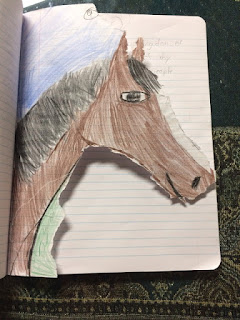
Tear the page and make something creative.
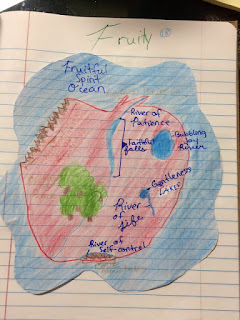
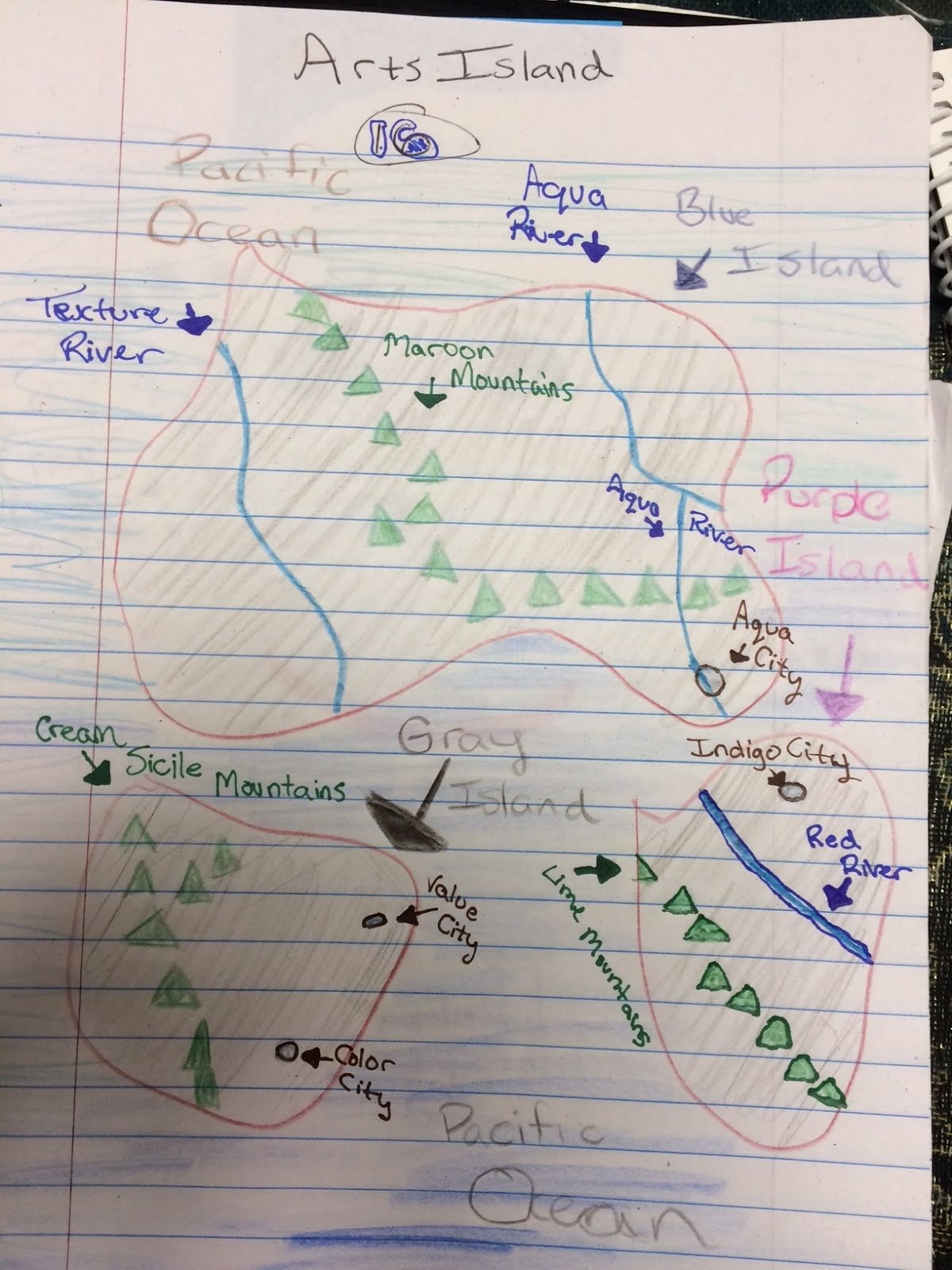
Design your own island. Label the cities, lakes, etc.